Do You Need Planning Permission for Padel Courts in the UK?
If you're considering building a padel court, planning permission should be one of the first things you investigate. Whether you're a landowner, sports club, hotel, school or commercial operator, understanding the planning requirements early can help prevent delays, unexpected costs and problems further into the project.
The short answer is that you should expect to investigate planning permission before building a new outdoor padel court. The precise requirements depend on the site, proposed development, existing land use and local planning rules. There is no reliable one-size-fits-all answer for every location.
General information, not legal advice. Planning rules differ across England, Wales, Scotland and Northern Ireland; check with your relevant planning authority.
When do padel courts need planning permission?
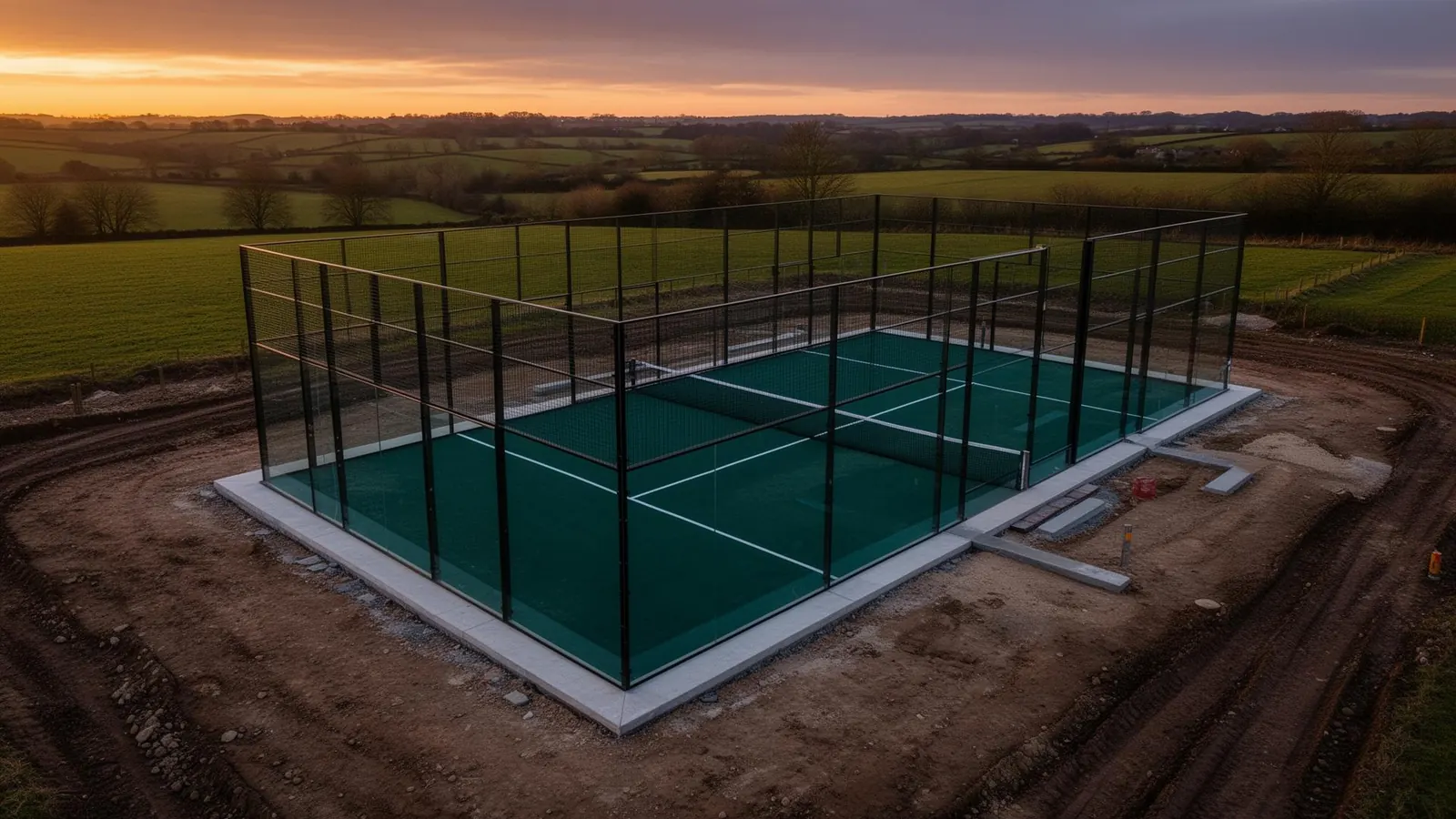
In England and Wales, planning permission is generally required for development involving new structures, engineering operations or a material change of land use, unless a relevant exemption or permitted development right applies.
A new outdoor padel court can involve several elements that need to be considered together. These may include the court structure, supporting foundations, fencing, floodlighting, access routes, drainage and changes to the way the site is used.
Even where land is already used for sport or recreation, that does not automatically mean a new padel facility can be installed without planning permission. The local authority will need to consider the circumstances of the particular site and proposal.
Planning systems differ in Scotland and Northern Ireland, so projects in those nations should be checked against the applicable local planning framework.
What planning issues can affect a padel court?
Planning authorities consider more than the playing surface itself. Several factors can influence whether a proposed facility is acceptable.
Noise and neighbouring properties
Padel produces repeated ball impacts, glass and racket sounds, and noise from players and spectators. The effect on nearby homes and other noise-sensitive properties can be an important consideration.
Site layout, operating hours, acoustic mitigation and the distance from neighbouring properties may all be relevant. A noise assessment may be requested where the circumstances justify one.
Floodlighting and operating hours
Lighting can extend playing hours but may create light spill or disturbance for nearby residents. The position, height, direction and specification of lighting should be considered early.
The proposed hours of operation may also affect how the authority assesses the development.
Land use and location
A court proposed within an established sports club may present different planning considerations from one on undeveloped countryside or agricultural land.
Agricultural land is not automatically suitable for a commercial sports facility. A change of use, new structures, access improvements or associated development may require consent. Green Belt, conservation, landscape, ecological and other site-specific constraints can introduce further considerations.
Buildings, access and drainage
Indoor courts, covered courts and conversions of existing buildings can raise different questions from uncovered outdoor courts. Vehicle access, parking, drainage, surface water management and the relationship with neighbouring uses may also need to be addressed.
What should you prepare before applying?
A well-prepared proposal begins with an understanding of the site and the development being considered. Before submitting an application, it is sensible to:
- Check the site constraints. Establish the current planning position, existing use, relevant designations and any conditions attached to earlier permissions. A padel site feasibility review can help identify issues to investigate before progressing.
- Prepare an initial layout. Show the court positions, surrounding space, access, fencing, lighting and any associated facilities. Our padel court dimensions and space requirements guide can help inform that layout.
- Consider potential impacts. Identify nearby homes, likely noise concerns, lighting effects, drainage requirements and ecological constraints.
- Speak to the planning authority. Ask whether planning permission is likely to be required and what supporting documents may be appropriate.
- Allow time for professional input. A planning consultant, architect or other specialist may be useful where the proposal is complex or the site has significant constraints.
The documents required will depend on the application. Plans and drawings are commonly needed, and the authority may request additional assessments or information.
Can you build a padel court without planning permission?
Do not assume that a court is exempt simply because it is modular, prefabricated or described as temporary. The actual development, installation, land use and applicable planning rules matter more than the label used by a supplier.
If you believe a proposal may not require permission, ask the relevant local planning authority to confirm the position. Where appropriate, professional advice or a formal planning determination can help clarify the position before work begins.
Starting development without required permission can create enforcement risks and may lead to costly changes or remedial work.
Plan your padel court project with confidence
Planning is only one part of making a padel project viable. Ground conditions, drainage, court layout, access, construction costs and long-term operation should also be considered before committing to a site.
For a more detailed look at the planning process, the information you may need and the issues that can affect an application, visit our dedicated guide:
Explore the Padel Court Planning Application Guide
Understanding the planning position early gives you a stronger foundation for deciding whether your proposed site is suitable and what needs to happen next.
Read Our Padel Court Planning Application Guide →
Need support with your next steps? Explore our standalone padel planning and project development service or start with a padel site feasibility review.
Suggested further reading
For general planning information in England and Wales, consult GOV.UK guidance on when planning permission is needed. For padel-specific considerations, consult the Lawn Tennis Association's padel court construction and planning guidance.