Should Your Tennis Club Add Padel Courts?
Tennis clubs across the UK are increasingly considering whether to add padel courts to their existing facilities. With padel attracting players who might never previously have picked up a tennis racket, it presents an opportunity to attract new members, generate additional income and make better use of existing club facilities.
But is adding padel courts to a tennis club genuinely worthwhile? And what should committee members and club managers consider before committing to a development?
The answer depends on more than simply whether there is enough room for a court. The strongest projects combine local demand, sensible investment, good site planning and a commercial model that works alongside the existing tennis operation.
1. Why are tennis clubs considering padel?
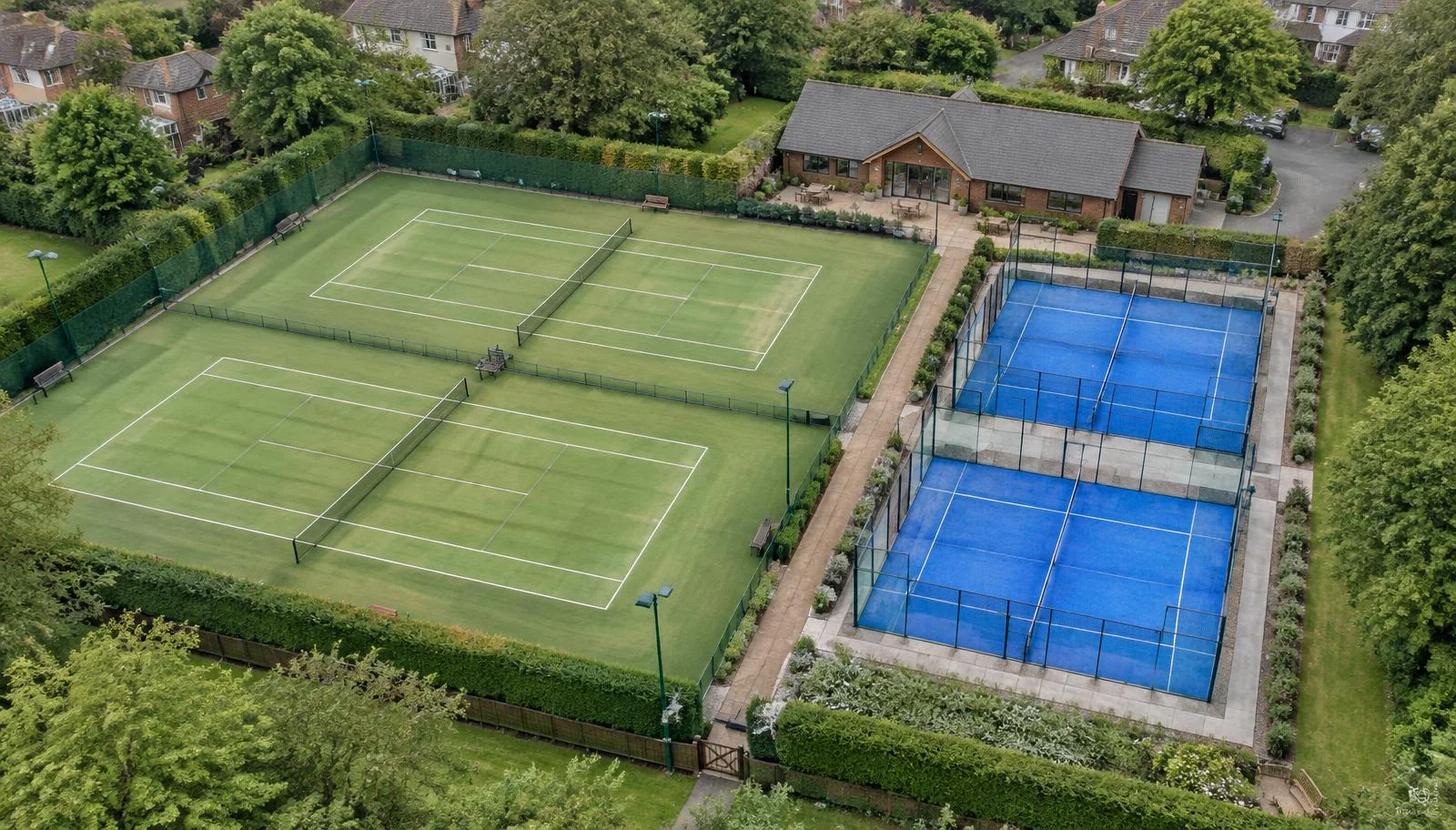
Padel offers something different from traditional tennis. It is relatively easy for beginners to pick up, naturally social and played in doubles, making it attractive to families, younger adults and groups of friends.
For established tennis clubs, this creates an opportunity to reach people who might not otherwise consider joining.
Rather than competing with tennis, padel can complement it. Existing members may become regular padel players, while new customers discover the club through its padel facilities and subsequently become involved in other activities.
There are also commercial benefits. Court bookings, coaching sessions, social leagues, tournaments and equipment hire can all contribute additional income.
For clubs with an existing clubhouse, changing rooms, parking and reception facilities, some of the supporting infrastructure is already in place.
2. Can your existing site accommodate padel courts?
Before considering costs or potential revenue, the first question is whether your tennis club has a suitable location.
A standard doubles padel court has a playing area of 20m by 10m. However, the development requires additional space for access, circulation, maintenance and safe movement around the courts.
Potential locations include:
- Underused tennis courts or redundant playing areas.
- Surplus land around the existing courts.
- Areas of unused car parking or hardstanding, where suitable.
- Land that could accommodate a new covered or outdoor facility.
It is important not to assume that an existing tennis court can simply be converted into a padel court. Ground conditions, drainage, levels, foundations and access all need to be assessed.
The layout must also consider how the new facilities interact with existing tennis courts, including player circulation, lighting, noise and potential disturbance.
A professional site assessment can establish how many courts are realistically achievable and identify potential construction complications before money is committed.
3. What does adding padel courts cost?
The investment required depends on the number of courts, specification, location and amount of supporting construction work.
The court package itself is only one part of the overall project. Groundworks, drainage, concrete foundations, lighting, electrical connections and installation can all contribute significantly to the final cost.
Additional considerations include:
- Planning applications and professional fees.
- Covered structures or indoor facilities.
- New pathways, fencing and access arrangements.
- Landscaping and screening.
- Additional changing or clubhouse facilities.
Building multiple courts together may offer efficiencies in site preparation, installation and shared infrastructure. However, clubs should avoid building more capacity than their local market can realistically support.
It is worth obtaining a properly itemised project quotation rather than comparing suppliers purely on the advertised price of a padel court.
4. Can padel generate additional income for your club?
This is often the most important question for a club committee.
Padel provides an opportunity to introduce a new source of revenue without necessarily establishing an entirely separate business.
Potential income streams include:
- Pay-and-play court bookings.
- Padel memberships and court access packages.
- Coaching and beginner programmes.
- Junior sessions and holiday activities.
- Social leagues and organised competitions.
- Corporate events and private bookings.
- Racket and equipment hire.
The existing membership base may provide an initial source of demand, but clubs should also investigate the wider catchment area.
How many potential players live nearby? Are there competing padel facilities? What are local operators charging? Are existing courts fully booked during peak periods?
These questions help establish whether the proposed development has a realistic customer base.
Importantly, court revenue is not the same as profit. Maintenance, staffing, electricity, insurance, booking systems and financing costs must all be included when calculating the likely return.
5. Will padel affect your existing tennis members?
Introducing padel should not come at the expense of the club's established tennis community.
Some members may welcome the additional facilities immediately, while others may be concerned about losing playing space, increased noise or changes to the club's identity.
Consultation is therefore important.
Explain the proposed development, establish whether existing members are interested in playing padel and consider how the new facilities will operate alongside tennis.
A well-planned development can bring new people into the club, increase social activity and create opportunities for joint memberships and events.
The objective should be to expand the club's appeal rather than replace one sporting activity with another.
6. Planning, construction and installation
Padel court development requires more consideration than purchasing a court package and arranging delivery.
Planning requirements can vary according to location, existing land use, lighting, proposed structures, operating hours and potential noise impacts.
Groundworks are equally important. Poor drainage, inadequate foundations or incorrectly prepared surfaces can create expensive problems after installation.
Before proceeding, clubs should establish:
- Whether planning permission is required.
- Whether floodlighting will be acceptable.
- Whether noise assessments or mitigation are necessary.
- Whether the site has suitable ground conditions and drainage.
- Whether existing utilities and access arrangements are adequate.
- How construction will affect normal club operations.
An experienced construction and installation partner can help coordinate these elements and reduce the risk of problems between separate contractors.
7. So, should your tennis club add padel?
For many established tennis clubs, adding padel courts is worth investigating.
Existing facilities, established membership, available land and a recognisable local presence can provide a useful starting advantage over developing a completely new venue.
However, a successful project depends on getting the fundamentals right. There needs to be sufficient local demand, an appropriate site, a realistic construction budget and a commercial model that accounts for both revenue and ongoing costs.
Starting with a site assessment and a financial appraisal is usually more sensible than immediately committing to a particular number of courts.
The right development might be two outdoor courts, a covered facility or a larger multi-court installation. The answer will depend on the individual club.
Planning a padel development at your tennis club?
Before committing to construction, understand what your proposed facilities could realistically generate.
Explore the Build & Padel Padel ROI & Revenue Guide to examine court revenue, utilisation, operating costs and the commercial factors that influence the viability of a padel development.
Explore the Padel ROI & Revenue Guide