Can You Turn an Unused Car Park into a Padel Facility?
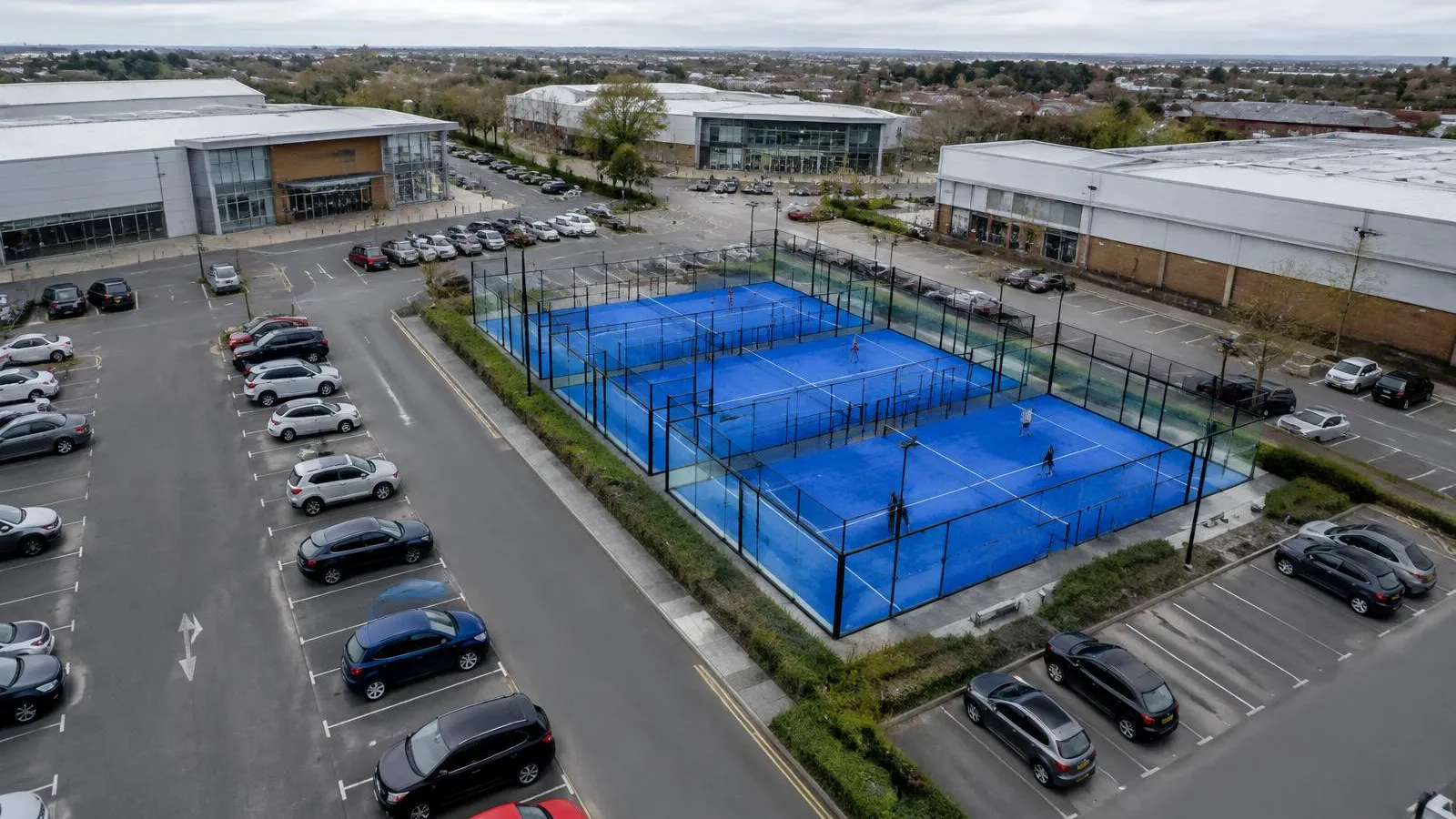
An underused car park could represent an opportunity for a new sports facility. As padel continues to grow in popularity across the UK, commercial property owners, landlords and developers are looking at alternative ways to use existing space. But can you convert a car park to padel courts, and what should you consider before committing to a project?
The answer depends on the site, planning requirements, surrounding buildings and the commercial case. A car park may offer a useful starting point, but not every site will be suitable. Here are the main factors to assess.
Why Consider Converting a Car Park to Padel Courts?
Padel facilities need accessible locations with enough space for courts, circulation areas and supporting amenities. Existing commercial sites can sometimes offer advantages over developing entirely new premises.
An underused retail, leisure or office car park may already have road access, hardstanding and nearby services. Depending on the location and existing infrastructure, this could simplify parts of the development process.
A padel facility could also bring more regular visitors to a commercial destination, potentially benefiting neighbouring businesses. For landlords, it may offer an alternative use for space that is no longer generating sufficient value in its current form.
However, the opportunity cost matters. If a car park still serves busy tenants or customers, converting it could undermine the wider site's operation. The first step is to establish whether the land is genuinely surplus to requirements.
Is There Enough Space for Padel Courts?
Space is one of the first things to investigate when assessing padel courts on commercial land.
A standard doubles padel court has an internal playing area of 20 metres by 10 metres. That is only the playing area, however. A practical facility also needs room for court structures, safe circulation, entrances, maintenance access and potentially reception facilities, toilets, seating and refreshments. Our article on how much space you need for a padel club explains the difference between court area and total site area.
The layout matters as much as the total area. Narrow or irregular plots, existing buildings, lighting columns, drainage features and access routes can limit the number of courts that fit.
Outdoor courts may be feasible on a suitable open site, while covered or indoor courts introduce additional requirements for structural height, foundations and building design — see our indoor vs outdoor padel courts guide.
Do not estimate capacity using court dimensions alone. A proper site assessment should establish how many courts can fit without compromising access, safety or the visitor experience.
Can You Build Padel Courts on Commercial Land Without Planning Permission?
Not necessarily. An existing car park does not automatically have permission for a padel facility simply because it is already developed.
In England, the need for planning permission depends on the proposed development and its circumstances. Installing courts, glass enclosures, fencing, lighting, signage, changing facilities or a canopy may raise different planning considerations. The site's existing lawful use, local planning policies and potential effects on neighbours will also matter.
Noise and lighting are particularly important where homes or other sensitive uses are nearby. Operating hours, floodlighting, access arrangements and increased visitor traffic may influence how an application is assessed.
Before spending heavily on detailed designs, discuss the proposal with the relevant local planning authority and obtain professional planning advice. Do not assume that an existing commercial designation or hardstanding removes the need for consent. Our padel court planning permission guide covers the main issues.
What About the Existing Surface and Infrastructure?
A car park may look construction-ready, but its surface and underlying ground still need investigation.
Padel courts require suitable foundations and accurate installation. Existing asphalt or concrete may need alteration, excavation or replacement, depending on its condition and the court manufacturer's specifications. Our groundworks and foundations guide explains what this involves.
Drainage is another important consideration. The proposed layout must manage surface water appropriately and avoid creating drainage problems elsewhere on the site.
You should also check underground services, electrical capacity for lighting, vehicle and pedestrian access, and the feasibility of delivering construction materials and court components.
These investigations can identify expensive constraints early and help prevent unrealistic project budgets.
Will a Padel Facility Be Commercially Viable?
A technically suitable site is not necessarily a profitable one.
Assess local demand, nearby competing clubs, population catchment, accessibility and the prices players are likely to pay. Consider how utilisation might vary by time of day, season and weather, particularly for outdoor courts.
Your financial model should account for court installation, groundwork, planning and professional fees, lighting, maintenance, insurance, staffing and any lease or land costs. Additional revenue might come from coaching, leagues, memberships, equipment hire or refreshments, but these should be based on realistic demand.
If the site currently generates rental income or supports other businesses, include the financial impact of changing its use.
How to Assess Your Site's Potential
Start by measuring the available area and identifying existing constraints. Review access, neighbouring properties, nearby residential uses, planning history and potential demand. Then seek preliminary advice on layout, planning and construction requirements before progressing to a full padel site feasibility review.
An unused car park can be a promising starting point for a padel development, particularly where access and infrastructure are already in place. But success depends on more than fitting courts into the available space.
Could your site work for padel?
Explore the possibilities for your land or property with our site assessment resource. Explore whether your site could work for padel.
Related reading
All Padel Court Articles & Insights · Padel guides and resources